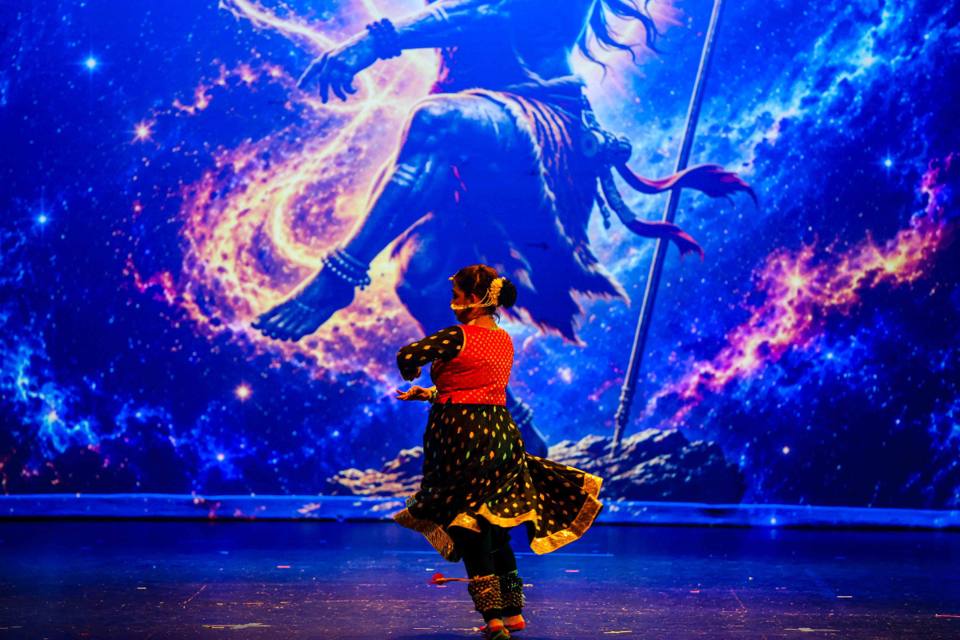
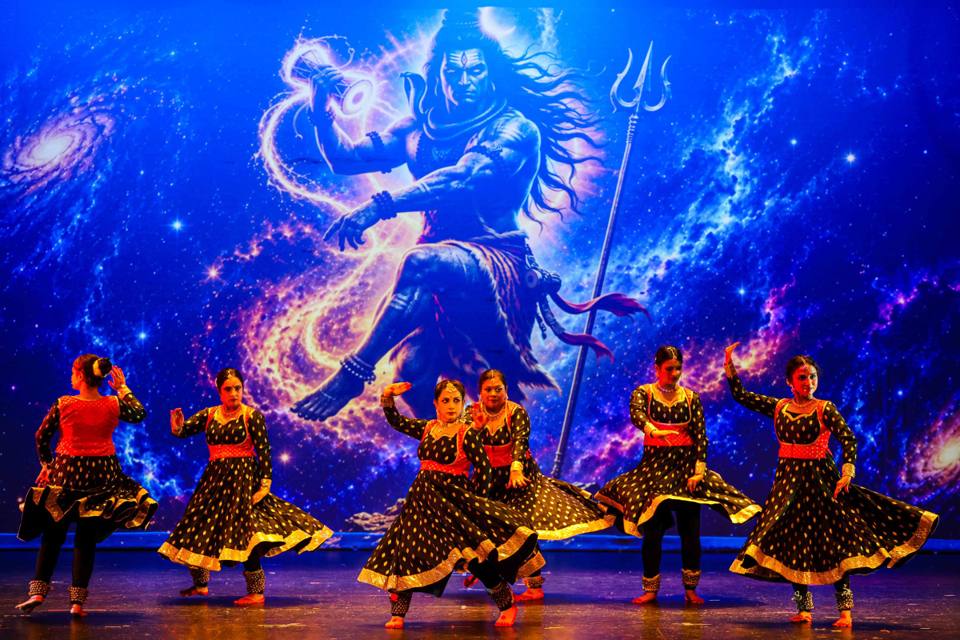
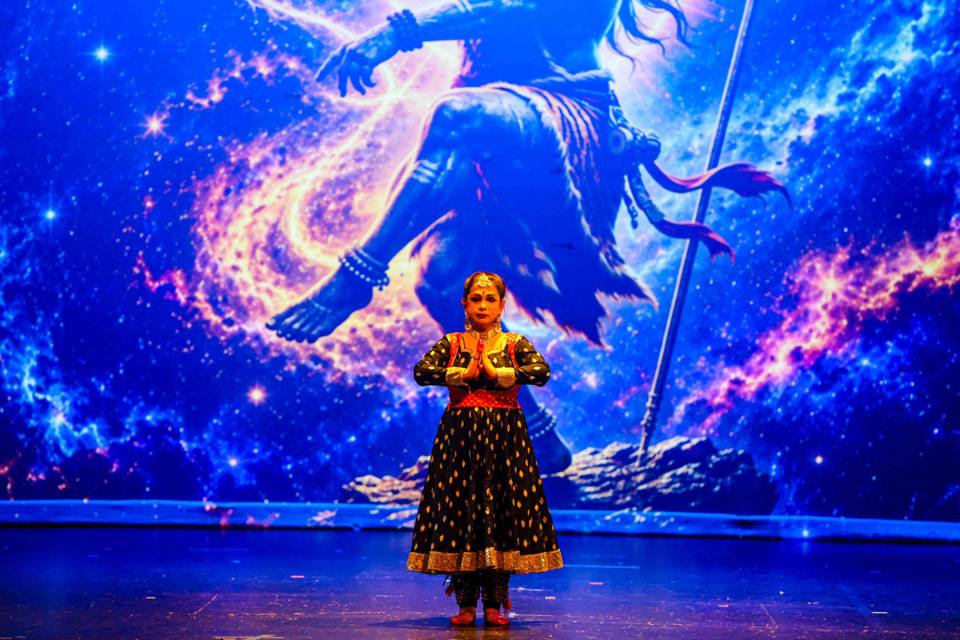
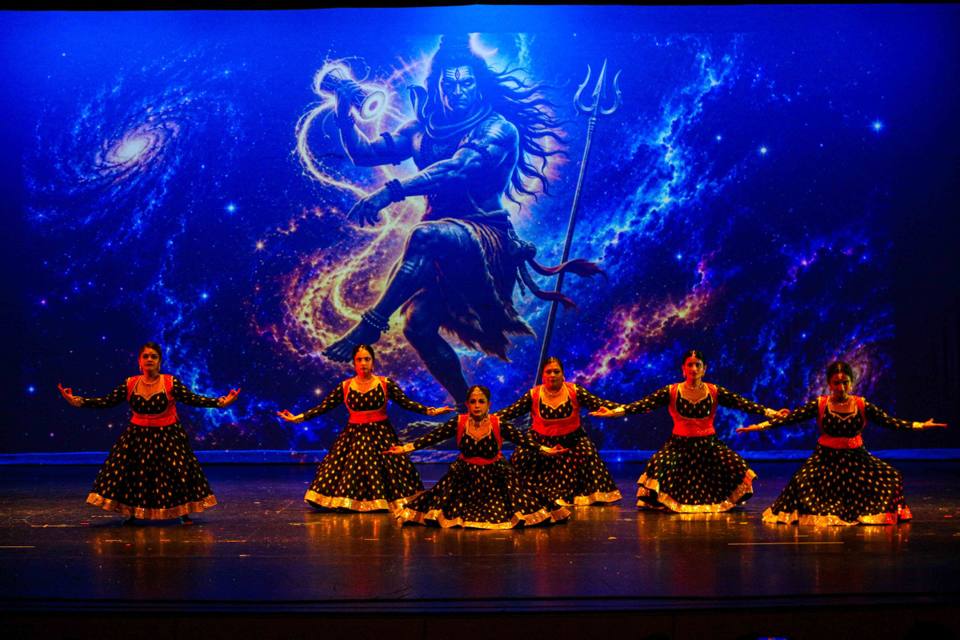
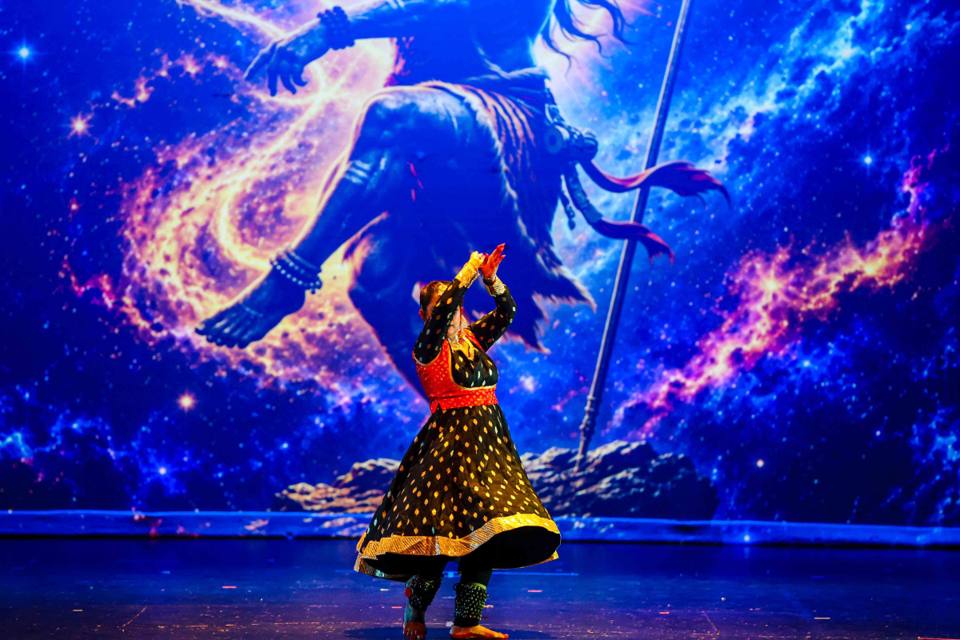
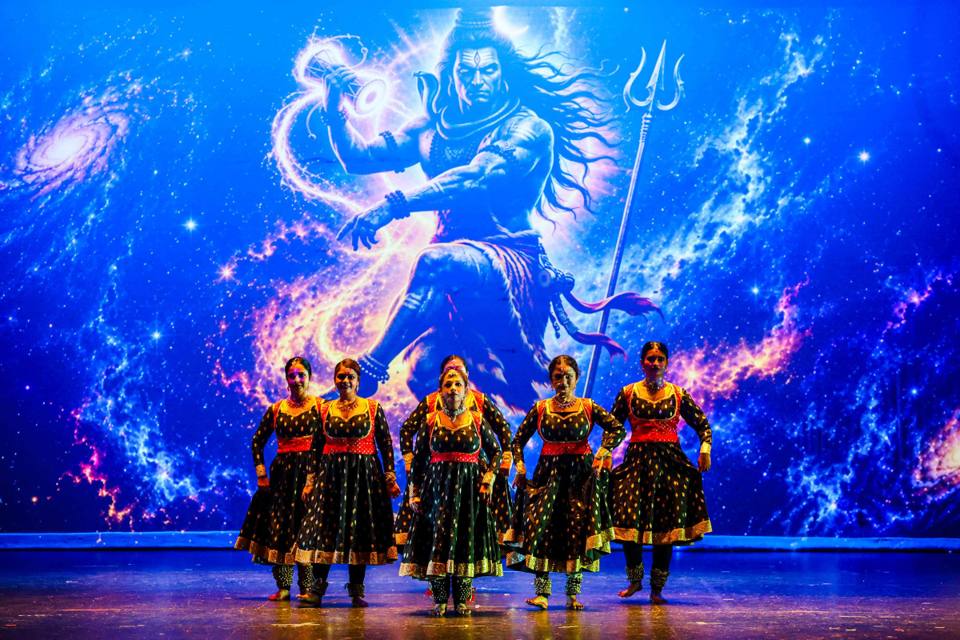
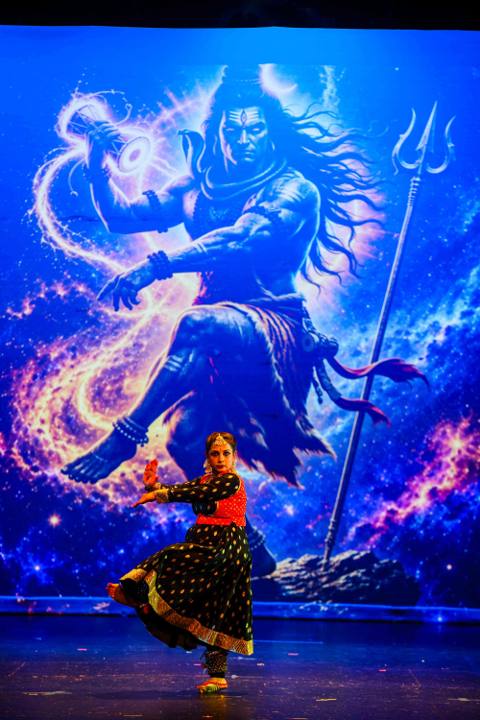
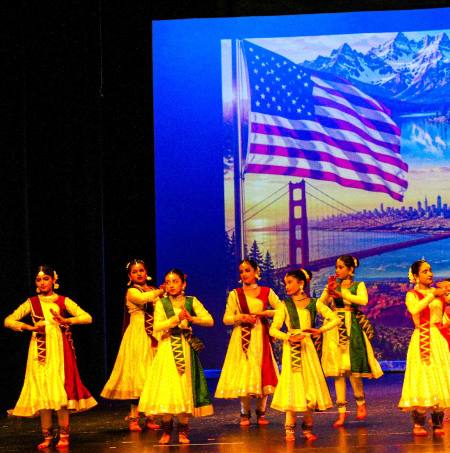
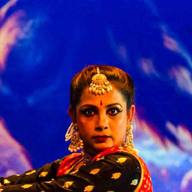
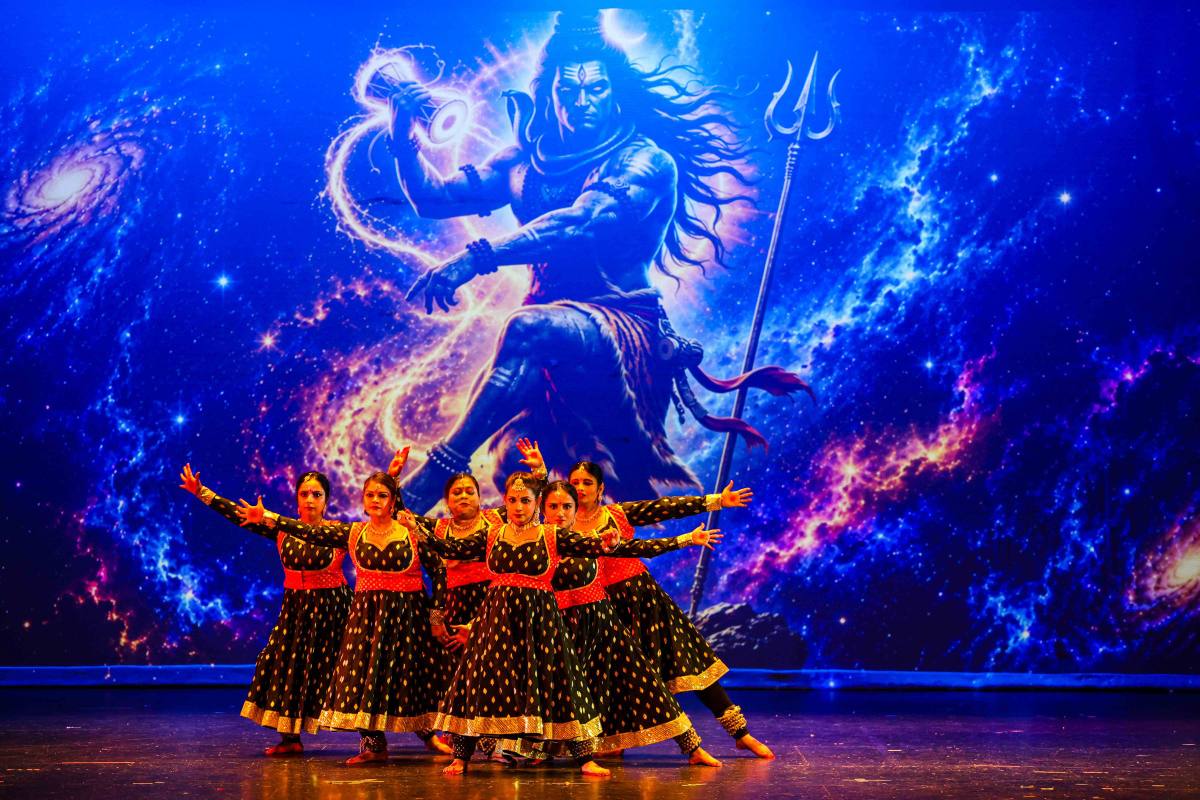
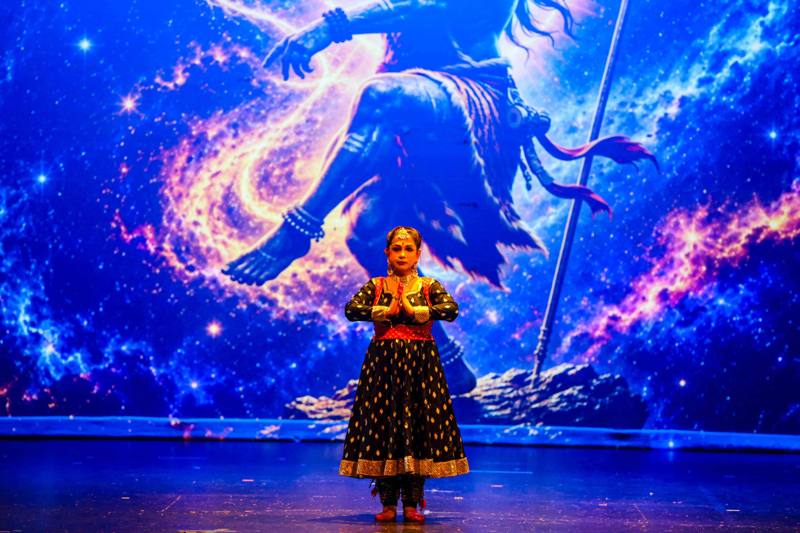
Kathak takes its name from katha, story. It began with the kathakars, travelling storytellers of North India, and grew through temple courtyards and Mughal courts into the classical form danced today.
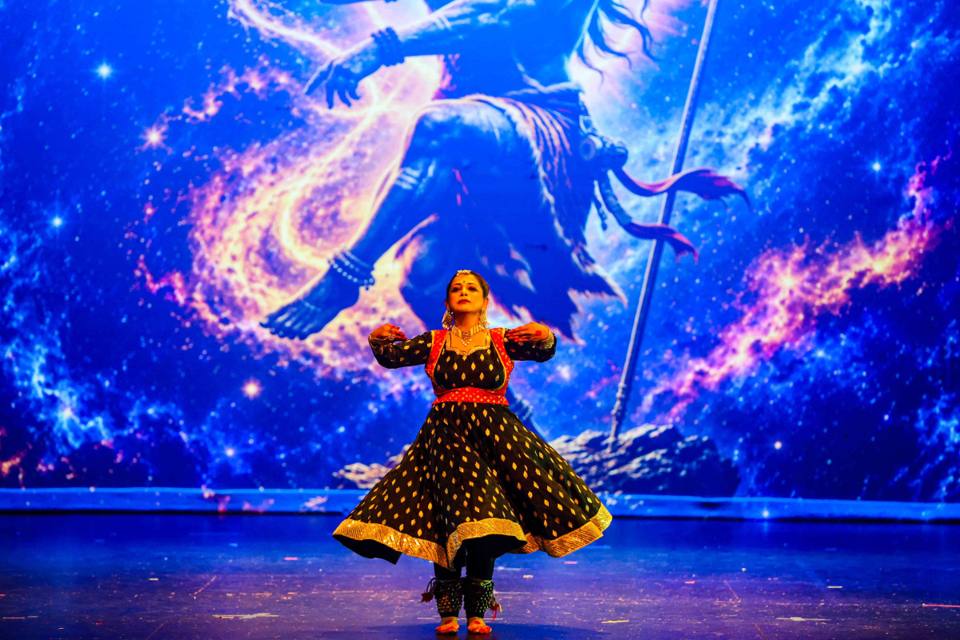
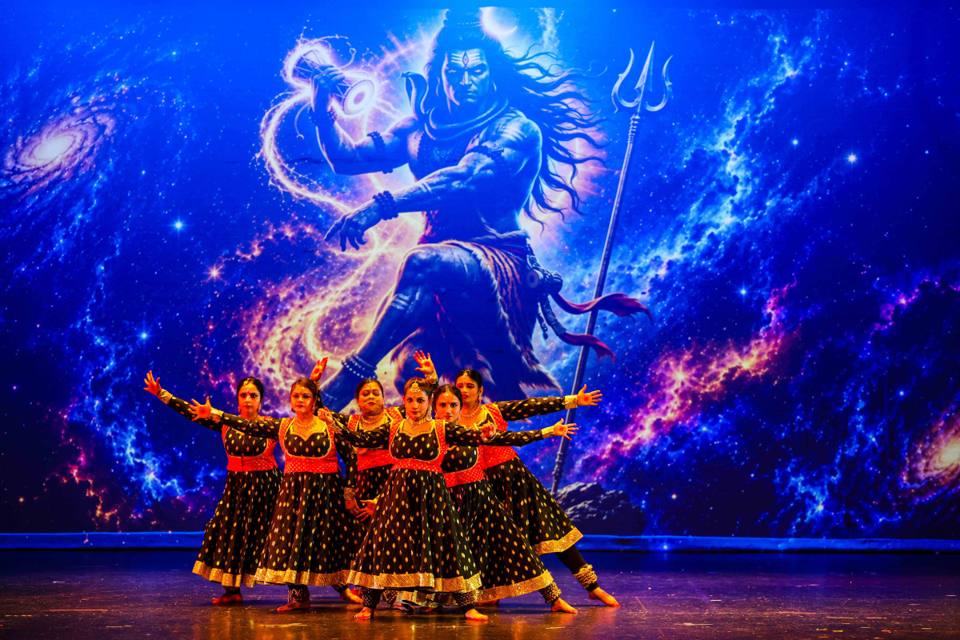
A Kathak dancer keeps time with the tabla through the feet, wearing ghungroos of up to a hundred bells on each ankle. Straight-legged spins, sharp sculpted poses, and quiet, detailed expression of the face and hands sit side by side in the same piece.
At Rhythm, students learn all of it in order: posture first, then rhythm, then the vocabulary of movement, then the stories.